
The modern narrative surrounding artificial intelligence is intellectually convenient and strategically misleading. It frames the current acceleration of compute, infrastructure and capital allocation as a response to productivity demands, digital transformation and consumer applications. This narrative is not wrong, but it is incomplete to the point of distortion. What is unfolding is not a software revolution. It is the material reconfiguration of industrial civilization under pressure from its own success.
Artificial intelligence is not abstract. It is physical. It consumes electricity, water, silicon, copper, lithium, cobalt and rare earth elements at a scale that is only beginning to be understood. The expansion of AI is therefore not merely a question of algorithms or models, but of energy systems, supply chains and geopolitical control. Once this is understood, the current explosion of investment into AI infrastructure ceases to look excessive. It begins to look inevitable.
And once that inevitability is accepted, a second conclusion follows with uncomfortable clarity. If the resource base required to sustain exponential growth cannot be secured on Earth under stable conditions, it will be sought elsewhere. Not out of curiosity. Not out of ambition. But out of structural necessity.
Not out of curiosity. Not out of ambition. But out of structural necessity.
The energy reality of artificial intelligence
The energy footprint of artificial intelligence is not a marginal side effect. It is the defining constraint of the entire system. In 2024, global data centres consumed approximately 415 terawatt-hours of electricity, a figure comparable to the total annual consumption of a mid-sized industrial nation. According to projections by the International Energy Agency, this number is expected to reach roughly 945 terawatt-hours by 2030. That is not incremental growth. It is a near doubling within a single decade, driven primarily by the expansion of AI training clusters and inference infrastructure.
To understand what this means in practice, one has to move beyond abstract numbers. The training of a single large language model such as GPT-3 required approximately 1,287 megawatt-hours of electricity, enough to power over one hundred households for an entire year. More advanced models, including GPT-4-class systems and beyond, are widely assumed to have required multiples of that energy. What is often overlooked, however, is that training is only the initial phase. The real energy demand emerges during inference, when models are deployed at scale. A single AI query can consume ten to one hundred times more energy than a traditional search query.
This creates a persistent, non-linear load on global energy systems. Unlike traditional industrial consumption, which can often be forecast and stabilised, AI-driven demand scales with usage in real time. As billions of queries are processed daily across enterprise systems, consumer applications and autonomous agents, the baseline demand becomes structurally higher.
The response from the technology sector has been correspondingly aggressive. In 2025 alone, approximately 580 billion US dollars were invested globally into AI-related infrastructure, including data centres, grid expansion, cooling systems and energy supply. Individual companies are committing capital at a scale previously associated only with national infrastructure projects. Microsoft has announced plans to invest 80 billion US dollars into new data centres by end of 2026, while Meta is allocating around 65 billion US dollars in a single year. These investments are not speculative. They are reactive.
AI Infrastructure Investment 2025
$580B
Global AI infrastructure investment
$80B
Microsoft data centres by 2026
$65B
Meta in a single year
And they are already pushing existing systems to their limits. Grid operators in the United States have issued warnings about reliability risks under extreme conditions, exacerbated by the increasing baseline demand of data centres. What was once considered peak load is becoming permanent load. The system is not just growing. It is hardening.
Water adds an additional layer of constraint that is rarely discussed in public discourse. Data centres rely heavily on water for cooling, and consumption is rising rapidly. Microsoft alone used approximately 6.4 million cubic metres of water in 2023, a year-on-year increase of 34 percent driven largely by AI workloads. In regions where water scarcity is already a geopolitical issue, this introduces a new dimension of competition.
At this point, the nature of the problem becomes clear. Artificial intelligence is not limited by software innovation. It is limited by physical infrastructure. And that infrastructure depends on resources that are unevenly distributed, politically sensitive and increasingly contested.
The problem is not efficiency. It is scale. The system consumes because it must.
Critical minerals and the fragility of supply chains
If energy is the fuel of the AI era, critical minerals are its structural backbone. Every layer of modern digital infrastructure depends on a set of materials that are far from evenly distributed across the globe. Lithium, cobalt, rare earth elements and copper are not interchangeable commodities. They are highly specific inputs that determine the feasibility of entire technological systems.
Lithium, for example, is central to energy storage. Global production reached approximately 180,000 tonnes of lithium equivalent in 2023, with over ninety percent of this output concentrated in just three countries: Australia, Chile and China. The so-called lithium triangle in South America alone accounts for an estimated 58 percent of global reserves. Bolivia’s Salar de Uyuni is believed to contain around 21 million tonnes, making it one of the largest known deposits in the world. Yet extraction remains heavily regulated and politically constrained.
Cobalt presents an even more acute concentration risk. Approximately 73 percent of global cobalt production originates from the Democratic Republic of Congo, a region where political instability, regulatory uncertainty and ethical concerns intersect. A significant portion of this production is derived from artisanal mining, often under conditions that would be unacceptable in most industrialised economies. At the same time, China controls roughly 80 percent of global cobalt refining capacity, effectively dominating the value chain even where it does not control extraction.
Resource Concentration Risk
90%
Lithium from 3 countries
73%
Cobalt from DRC alone
60%
Rare earths processed by China
Rare earth elements, essential for everything from advanced electronics to renewable energy systems, are even more tightly controlled. China accounts for around 77 percent of global production and over 90 percent of processing capacity. This is not merely an economic advantage. It is a strategic lever that has already been used in geopolitical contexts, including export restrictions targeting specific countries.
Copper, often overlooked in public discourse, represents a slower but equally significant constraint. Demand is projected to increase by more than 50 percent by 2040, driven by electrification, infrastructure expansion and digitalisation. At the same time, the development cycle for new copper mines averages around 16 years from discovery to production. This introduces a structural lag that cannot be easily compressed.
Recycling, often presented as a solution, offers only partial relief. In the United States, only around 5 percent of lithium-ion batteries are currently recycled. Global recycling rates for rare earth elements remain below 1 percent. Even in the case of copper, where recycling is more established, it currently covers only about 35 percent of demand, with optimistic projections reaching 50 percent by 2040.
Taken together, these figures reveal a system that is highly dependent on a narrow set of inputs, sourced from a limited number of regions and processed through concentrated industrial capacities. This is not a stable equilibrium. It is a structural vulnerability.
The system is heavily dependent on materials that are geographically concentrated, politically sensitive and processed through limited industrial capacities. This is not a stable equilibrium. It is a structural vulnerability.

Geopolitics, industrial strategy and the limits of earth
The distribution of critical resources is not a neutral fact. It shapes the strategic behaviour of states and corporations alike. China’s approach to resource control provides a clear example of long-term strategic planning. Over the past two decades, it has systematically built a vertically integrated position across multiple supply chains, from extraction to processing to manufacturing.
In lithium-ion batteries, China controls over 75 percent of global production capacity. In solar modules, its share exceeds 80 percent. In electric vehicles, its global market share has grown from 27 percent in 2020 to over 60 percent in 2024. These are not isolated successes. They are the result of coordinated policy, capital allocation and industrial execution.
Western responses, while significant, remain fragmented. The United States has introduced measures such as the Inflation Reduction Act and the CHIPS and Science Act, allocating tens of billions of dollars to domestic production and technological development. The European Union has established targets for domestic extraction, processing and recycling through the Critical Raw Materials Act. Yet these initiatives are reactive and operate within a timeline that is measured in years, not decades.
This asymmetry creates pressure. Not immediate collapse, but a persistent strategic imbalance that influences decision-making at the highest levels. Access to resources becomes a question of resilience, sovereignty and long-term competitiveness.
At a certain point, the limitations of Earth-based supply chains become apparent. Not because resources are absent, but because they are constrained by geography, politics and environmental considerations. Expansion beyond these constraints becomes not just an opportunity, but a strategic imperative.
Space, robotics and the reconfiguration of economic boundaries are not aspirational concepts. They are the structural extensions of a system that has reached the edges of its current operating environment.
Space, robotics and the reconfiguration of economic boundaries
The concept of asteroid mining is often treated as speculative, and in many respects it still is. Current timelines suggest that commercially relevant operations may not materialise before the 2040 to 2050 timeframe. Even then, technical and economic challenges remain significant. The NASA Psyche mission has already revised earlier assumptions about the composition of asteroid 16 Psyche, indicating that it is not a pure metallic body but a heterogeneous structure with an estimated metal content of 30 to 60 percent.
These corrections are important. They prevent the narrative from drifting into unrealistic expectations. However, they do not invalidate the underlying logic.
The significance of space-based resource extraction is not determined by any single asteroid or mission. It is determined by the long-term trajectory of cost curves, technological capability and strategic necessity. Launch costs have already decreased by an order of magnitude, and further reductions are expected. Robotics and autonomous systems continue to improve in capability and reliability. Artificial intelligence enables systems to operate independently in environments where human presence is impractical.
What emerges is a new economic layer. Not immediately accessible, not immediately profitable, but structurally aligned with the needs of a system that requires expansion.
Robotics plays a central role in this transition. Autonomous systems can operate continuously, without the constraints of human biology, and can be deployed at scale. They redefine the relationship between time and capital. Projects that would be unthinkable under human constraints become viable when executed by machines that do not require rest, protection or immediate return.
This introduces a form of strategic patience that is rarely seen in traditional markets. Investments can be structured over decades, with the expectation that early movers will establish positions that are difficult to challenge once the system matures.
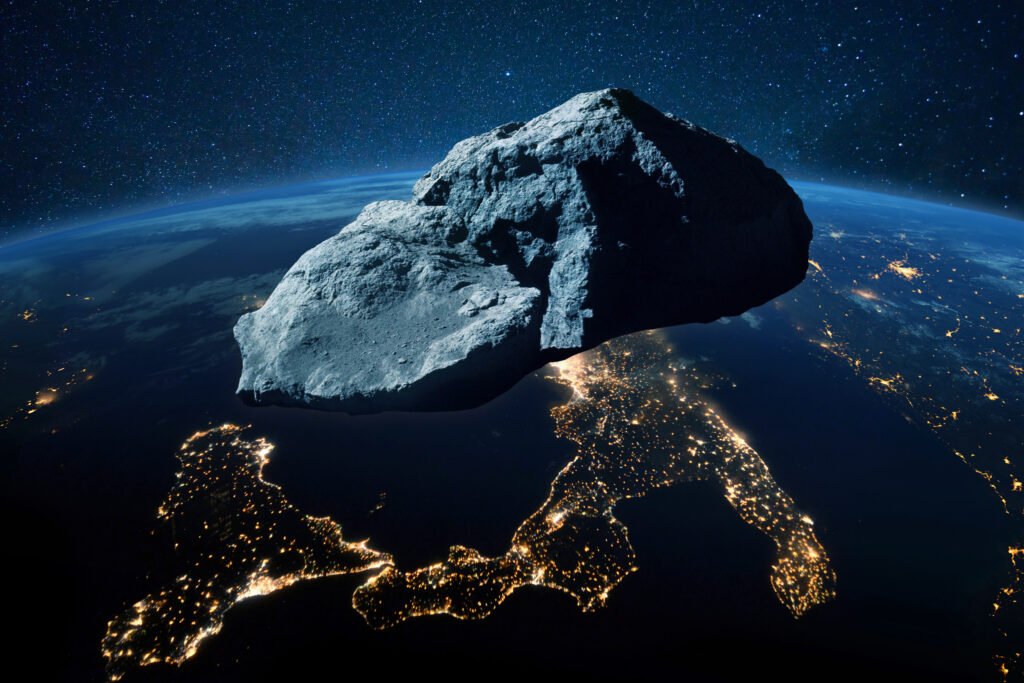
The inventory beyond earth
Up to this point, the argument has been structural, almost philosophical. It establishes why the convergence of artificial intelligence, robotics and distributed compute architectures is not accidental, but inevitable. Yet inevitability alone does not justify capital allocation at the scale we are currently witnessing. Markets do not reward narratives, they reward asymmetry backed by measurable potential.
This is precisely where the conversation shifts from abstraction to inventory. Because the most misunderstood aspect of space industrialisation is not the engineering challenge, but the persistent underestimation of what is actually out there. Not in speculative terms, not in science fiction metaphors, but in quantifiable, partially verified material compositions that already allow for economic modelling.
Once one stops treating space as a void and starts treating it as a balance sheet, the logic behind current investment flows into AI, autonomous systems and computational infrastructure becomes almost trivial. These technologies are not searching for a purpose. They are being positioned for extraction, processing and control of resource pools that are, by any terrestrial standard, absurd in scale.
What the regulatory imagination still struggles to grasp is that the space-resource thesis is not built on fantasy-grade abundance alone, but on an increasingly measurable inventory of specific materials in specific classes of bodies. The cleanest example is not the headline-friendly Psyche narrative, but the more sober work on ordinary chondritic material and near-Earth asteroids.
Laboratory analyses used as proxies for LL chondrites have reported average platinum concentrations of about 30.9 grams per tonne, alongside palladium at 17.5 g/t and iridium at 15.0 g/t, which means that on a grade basis some asteroid analogues can exceed terrestrial platinum ores by a wide margin. That matters because the global platinum market is small in physical terms, with annual world platinum production hovering around 180 to 200 tonnes. On that basis, modelling shows that a single 100 metre asteroid could contain roughly 43 tonnes of platinum, which translates to around a quarter of global annual supply. At 200 metres, this scales to approximately 345 tonnes, already approaching two full years of global production. At 500 metres, the numbers move into an entirely different category, with more than 5,000 tonnes of platinum equivalent, effectively multiplying annual global output many times over. Scarcity, in this context, reveals itself not as a law of nature, but as a function of access and technological capability.
Asteroid Platinum Potential by Size
43t
100m asteroid — 25% of annual global supply
345t
200m asteroid — 2 years of production
5,000t+
500m asteroid — multiples of global output
Then there is the bulk-material argument, which matters far more than the precious metals narrative suggests. The asteroid 16 Psyche, long romanticised as a pure metal body, is now understood to contain between 30 and 60 percent metal, embedded in a more complex structure. Even under conservative assumptions, this translates into an inventory measured in trillions of tonnes of iron, nickel and associated metals. Psyche alone carries a mass of approximately 2.29 × 10¹⁹ kilograms, which shifts the conversation away from scarcity entirely and toward logistics and control. In parallel, bodies such as Ceres demonstrate that water, arguably the most strategically valuable resource in space, is not rare. Estimates suggest that up to 30 percent of Ceres may consist of water in various forms, including ice and subsurface brines. This is not a curiosity. It is infrastructure in waiting. Water becomes propellant, shielding, life support and industrial input, effectively turning the economics of space travel and manufacturing on its head.
And if one expands the perspective further, the Moon itself ceases to be a barren object and instead becomes a near-Earth industrial reserve. Lunar regolith contains roughly 45 percent oxygen bound in oxides, alongside significant amounts of silicon, aluminium and iron. These are not exotic materials, but they are precisely the building blocks of industrial civilisation. Add to this the often-cited but still technologically challenging helium-3 reserves, with estimates in the range of over one million tonnes, and the scale becomes difficult to ignore. While extraction remains complex, the strategic implication is clear. Even a fraction of these resources, once accessible, would be sufficient to shift global energy and industrial systems into an entirely new phase. AI, in this equation, is not the endgame. It is the system that makes the system possible.
Scarcity reveals itself not as a law of nature, but as a function of access and technological capability.
Conclusion: the system expands or It stagnates
The convergence of artificial intelligence, energy systems, critical minerals and space technologies is not coincidental. It reflects a deeper structural dynamic that is reshaping the boundaries of economic activity. Each component reinforces the others, creating a system that is both powerful and constrained.
Artificial intelligence increases demand for energy and materials. Energy systems depend on critical minerals. Critical minerals are geographically concentrated and politically sensitive. This creates pressure that cannot be resolved within the existing framework.
Expansion becomes the only viable path. Space is not a solution in the immediate sense. It is a strategic horizon. A domain where constraints can be redefined, where new supply chains can be established and where the economic substrate of civilisation can be extended beyond its current limits.
Those who understand this dynamic do not see current investments as excessive. They see them as necessary positioning within a system that is preparing to transition. And when that transition occurs, it will not be announced.
It will simply become obvious, in retrospect, that everything that is being built today was never meant to remain on Earth.